Recent Posts















































You are !Not Alone

/ACSnN
No.3990

Hi people. Circumstances have led me back to this place. Nice to meet you all.
Random videos, songs, blogs, web-pages, etc incoming along with anything interesting I find along the way.
This blog has no goal. I always led myself astray when goals were involved. So for now there's no goal. Only a desire to be. Be the dumb and retarded self and be not judged for it. Escape, you can say.
Anyways, hi again.
/ACSnN
No.3991
well i guess a goal is involved after all.
Captcha: SbG

/ACSnN
No.3993
/ACSnN
No.3994
url


lwrwGc
No.3995
>>3994
very cool :D

otPqQI
No.3999
>>3997
Are you learnjng polish?
zXfpRw
No.4000


4Z/b+r
No.4005

4Z/b+r
No.4006
otPqQI
No.4008
>>4000
The spelling of Kartoffel is only used in Eastern Poland. Hence.
otPqQI
No.4009
>>4004
You should talk to old school programmers who work in Fortran, COBOL etc. They have entire systems like these.

gJlUNq
No.4012
YouTube thumbnail url:
https:://img.youtube.com/vi/VIDEO_ID/maxresdefault.jpg

ZdRafR
No.4015
>>3990(OP)
KASTE?
pnVCJT
No.4019
>>4015
not brahmin not shudra
pnVCJT
No.4022
I didn't practice programming or dsa. just studied for semester exams and then slept through the entire vacation.
Life's sandas man.
pnVCJT
No.4025
pnVCJT
No.4026

I bought a 32gb pendrive today. Will put entirety of Gregory Alan Isakov's collection on it.
pnVCJT
No.4027

Even though I wanted this to be done with just a single command, some file names will in the end require manual renaming to fit the formatting.
It irks my brain in a way I cannot explain when everything's not in order in things like this.
otPqQI
No.4028
>>4027
Relatable.

SD7rsm
No.4030
>>4029
long time ago on dev channel (had to switch back to normal after getting employed not to brag or anything)
ocurQ+
No.4031
>>4030
Oh. I just noticed it today. What do you mean by dev channel tho?
ocurQ+
No.4032
i want to live in a comfy apartment on the 6th floor
nfGK5w
No.4033
F12 for bookmarks in SumatraPDF

nfGK5w
No.4034
just fuking do it (by the way I am a nigger)

nfGK5w
No.4035
mjdx4M
No.4036
mjdx4M
No.4037
>>4036
i forget so many things these days. Just now I gave someone my keys and then told them I am in the other room if they wanted my keys. Fq man
gtDUWT
No.4038
Wolf Larsen - If I Be Wrong
I need a post auto formatter man.
CBEa26
No.4039
this place has gotten lonely.
CBEa26
No.4048

I am so fucking retarded I want to kms but am too retarded and cowardly to even do that. Nothing gets better yaar. I am just a parasite eating my parents money. They still think I am redeemable but only I know how deep I am in the pit I dug for myself. I wish I had an overachieving sibling who could compensate for my retarded vile ass and then kms'ing would've been easier.
SD7rsm
No.4049
>>4048
post pdf to catbox and link here before you go containing nudes. you're leaving anyway might add will give us some /ent/ before. are you taking requests?
SD7rsm
No.4050
>>4049
for poses i mean
CBEa26
No.4051
>>4049
wtf
I am a guy nᴉgga. Also am not leaving. Need to take my parents to a few places first and then I'd think about sui. So about a decade to live.
CBEa26
No.4052
you probably posted in the wrong thread
y3IOaV
No.4053
CBEa26
No.4054

>>4053
nah I mean they spend their money on my education so it's my duty to atleast take them to some places that they couldn't go to coz of the costs of my education.
>they'll not miss you
well they still love me and that hurts yaar. I am grateful to have a stable family and not go through abuse that some bhachanners go through, but I have misused that kindness.
I hope they, or rather nobody ever misses me. I want to disappear into the void and my soul shall perish forever.
CBEa26
No.4055

U34rtf
No.4059


cEeBT5
No.4061
4cvck/wg/thread/8085519
cEeBT5
No.4062
am so fuking confused
ceoB0G
No.4064
I want to go back to my dorm room, but cooking for yourself sucks.
ceoB0G
No.4065

For now I'll just sleep. Tomorrow gotta try making garlic chicken.
4JDFT6
No.4066
>>4065
Share pics anamas
ceoB0G
No.4067
>>4066
Okay.

XuUOLd
No.4068
>>4064
what kinda hostel doesn't have a cafeteria? werid
ceoB0G
No.4069
>>4068
nah I meant to say my rent room but typed dorm and then didnt bother editing
YwVlYS
No.4070

YwVlYS
No.4071

YwVlYS
No.4072


YwVlYS
No.4074
JooVuw
No.4075
>>4073
These were very kino, do you plan to make some thing today? Like garlick chimken? I was panning to make coconut and a garlic based red chutney after i roast them on an iron tawa and shit.
YwVlYS
No.4076
>>4075
I wanted to make garlic chimken but apparently we can't eat chicken today and I am at home so can't make it today. Maybe tomorrow.
>coconut and gralic based red chutney
that sounds tasty. do you cook often? I cook very rarely and since am at home since 2 months I haven't made anything other than omelette and daal and those too only twice or thrice. If you cook do post here or in /ck/.
YwVlYS
No.4077

/b/ wasn't ever that comfy but now it has become unbearable. I hope other boards face some sort of rejuvenation event and good posters come. Also,
>be the change you want to see
I wish yaar, I wish.


JooVuw
No.4079
>>4076
>that sounds tasty.
I remember trying it once, it was great honestly.
>do you cook often?
Used to, during hostel days. Nowadays I don't.
>I cook very rarely and since am at home since 2 months I haven't made anything other than omelette and daal and those too only twice or thrice.
Daal is Good anon. More daal in diet = having to eat less pure carbs like rice and wheat. I always make daal, with tons of greens in it. Palal, and methi is my go to. I sometimes feel like adding the different kind of greeds that people won't think of adding to daal. Kale and what not, just to see how it works out.
>If you cook do post here or in /ck/.
I usually don't, infact I don't even use bhach all that much nowadays. But if I do, I will post on /ck/ one good thing that comes from the slow boards is the thread can stay alive for weeks or so since retards stay in b.
YwVlYS
No.4080

Have to make a habit of saving things. I have no interesting pictures saved, nor any good videos, not even things that are useful like guides, infographics, charts etc.
This year this habit is going to be on my list of things to do as much as I can, apart from fixing my taste in music.
YwVlYS
No.4081

>>4080
as well as studying and trying not to be a retard.
JooVuw
No.4082
>>4077
>>be the change you want to see
Age old story yaara, easier said than done. If we don't rail and rape those who chimp out outside of b, we basically enable that behaviour. Yes it was never comfy to be exact, but it did become more unbearable over last few months.
Normies whining about normies, newfags calling others newfags. Sub 70 IQ chimps unable to have a normal conversation. Regardless, inbreds tend to do these things. It can't be helped. The non b boards are still good, and something is nice about their slow pace.
JooVuw
No.4083
>>4080
For me, my habit making this year will be to not smoke anymore. I am quitting smoking and I am cleaning up all my digital presense. Making sure it's all tidied up, well documented and glowie proof before 2027.
JooVuw
No.4084
>>4080
I have thought of finishing that mllecha raj series that was made by that negro chaarya. As if now I only finished 3 episodes. Pain bhangir was really glazing this retard our of proportion. I was really hoping for something more kino. Got seriously disappointed.
YwVlYS
No.4085

>>4082
I agree yaar. There are also far less users engaging outside of /b/ so the slower boards have gotten even more slow. Well it's still nice, the slowness, the wait between posts.
>>4083
>quit smoking
All the best man. An acquaintance of mine stopped smoking last year and he did that by deliberately lowering his daily cig count until he didn't need to smoke for weeks on end and then never. Made it seem so effortless.
>clean up all my digital presence.
What do you mean by cleaning up? Deleting social media? I too do this every few years. Maybe this year I'll too since I've been using my current email and other sm accounts for 2 years.
>glowie proofing
What are you hiding anon? 
+SRwIY
No.4086
>>4085
i can't tell if you are nepali_oniichan, or motivasun anun
YwVlYS
No.4087

>>4086
aisa kyu ji? Aisa kya secret hai jo sirf humse chupa rahe ho
YwVlYS
No.4088
YwVlYS
No.4089


7sAJIy
No.4090
>>4085
>I agree yaar. There are also far less users engaging outside of /b/ so the slower boards have gotten even more slow. Well it's still nice, the slowness, the wait between posts.
I don't want to have to reply instantly, I wish to drop in for a few days a month and be happy to see the cool anons like you and yui.
>All the best man. An acquaintance of mine stopped smoking last year and he did that by deliberately lowering his daily cig count until he didn't need to smoke for weeks on end and then never. Made it seem so effortless.
That's pretty cool. I have been lowering it as well. The prince is jumping out of proportion actually. I have no choice but to give up smoking. If there is one good point to all this, I will have amazing sleep cycle now for sure.
>>4085
>What do you mean by cleaning up?
It's complicated
>Deleting social media? I too do this every few years.
Yes
>Maybe this year I'll too since I've been using my current email and other sm accounts for 2 years.
I deleted mine every two or three years, but I will build a system this time. This time I will make it so core mails can remain permanently isolated of any social media or jew opps.
>>glowie proofing
>>What are you hiding anon?
This selfie or me and my waifu, kek.
3ej9T8
No.4092

>>4090
>core emails separate from sm emails
That's a good idea. I have already used my main email for some of my sm accounts. I'll have to make some changes to those.
>selfie of me and my waifu


SEZ6m5
No.4096
>>4092
>That's a good idea. I have already used my main email for some of my sm accounts. I'll have to make some changes to those.
I am making mega switch to Proton recently and it has lots of features I wa about familiar with. A whole new world outhere. I will see what are the free options. If I enjoy it truly I will pay for it as well bladee.
3ej9T8
No.4097
>>4096
you should check out lainchan's sec board. It's a security and privacy focused and has lots of resources on opsec.
SEZ6m5
No.4098
>>4097
I would anon, sankyouuu

3ej9T8
No.4100

I want to watch a movie, but I am afraid of the emotional investment it requires and the depth it might leave me in.
I want to experience picrel alone some day.
3ej9T8
No.4101

Wish I hadn't known, hadn't been given the taste, hadn't felt loss like that.
Ofc the mature way is to move on, but... idk man. I am stuck chasing shadows.
OJt9cW
No.4107

>>4102
all za besto stoodycelling anon.
OJt9cW
No.4110

how come there are always atleast 5 users active on this board but no activity at all?
captcha: hERn

OJt9cW
No.4112
I wish to have an automatic facial recognition system capable of scraping yandex, google images and pinterest and perform similarity checks in real time but I am a retard. fukk man.
EW1mYK
No.4113
I spent this entire month playing games and watching stranger things
OJt9cW
No.4114

>>4113
brutal. Are you kalejfag?
I spent the entirety of 2025 after march in consistent stress (not a single day without it) and as a result my hair got REALLY thin. You can see my scalp.
OJt9cW
No.4117
some url dumps:
https://www.electronics-tutorials.ws/
https://nick-black.com/dankwiki/index.php?
title=Hack_on
https://www.cs.bu.edu/~best/courses/modules/Transistors2Gates/
https://simplifier.neocities.org/
good night sirs

nxY8zX
No.4119
nxY8zX
No.4135
Courtesy of Duck
How to fix your entire life in 1 day
If you're anything like me, you think new years resolutions are stupid.
Because most people go about changing their lives in the completely wrong way. They create these resolutions because everyone else does – we create a superficial meaning out of status games – but they don’t meet the requirements for true change, which goes a lot deeper than convincing yourself you’re going to be more disciplined or productive this year.
If you're one of these people, I'm not here to talk down on you (I tend to be a bit harsh in my writing). I’ve quit 10x more goals than I’ve achieved. I think that should be the case for most people. But the fact that people try to change their lives and utterly fail almost every time holds true.
However, as much as I think new years resolutions are stupid, it’s always wise to reflect on the life you hate so you can launch yourself toward something that much better, as we will discuss.
So whether you want to start the business, transform your body, or take the risk toward a more meaningful life without quitting after 2 weeks, I want to share 7 ideas you probably haven’t heard before on behavior change, psychology, and productivity so you can do just that in 2026.
This will be comprehensive.
This isn’t one of those letters that you read through and forget about.
This is something you will want to bookmark, take notes on, and set aside time to think about.
The protocol at the end (to dig deep into your psyche and uncover what you truly want in life) will take about a full day to complete, with effects that last far longer than that.
Let’s begin.
I – You aren’t where you want to be because you aren’t the person who would be there
When it comes to setting big goals, people tend to focus on one of the two requirements for success:
1. Changing your actions to make progress toward the goal (least important, second order)
2. Changing who you are so that your behavior naturally follows (most important, first order)
Most people set a surface-level goal, hype themselves up to remain disciplined for the first few weeks, then go back to their old ways without much struggle, because they were trying to build a great life on a rotting foundation.
If this doesn’t make sense, let’s run through an example.
Think of somebody successful. It can be a bodybuilder with a great physique, a founder/CEO worth hundreds of millions, or a charismatic dude who can chat up a group without a shred of anxiety entering his mind.
Do you think the bodybuilder has to “grind” to eat healthy? Does the CEO have to discipline themselves to show up and lead the team? To you, it may seem like that on the surface, but the truth is that they can’t see themselves living any other way. The bodybuilder has to grind to eat unhealthily. The CEO has to force themself to lie in bed past their alarm clock, and they hate every second of it (there is nuance here, just entertain me for a second).
o some people, my own lifestyle seems a bit extreme and disciplined. To me, it’s natural, and I don’t say that to contrast it with any other kind of lifestyle. I simply enjoy living this way. When my mom tells me that I should take a break, go out, and have some fun... I hold my tongue from telling her, “If I weren’t having fun, why would I be doing what I’m doing?”
This next sentence may sound simple, but it is baffling how many people don't get it.
If you want a specific outcome in life, you must have the lifestyle that creates that outcome long before you reach it.
nxY8zX
No.4136
If someone says they want to lose 30 pounds, I often don’t believe them. Not because I don’t think they are capable, but because there are too many times when that same person says, “I can’t wait until I'm done losing weight so I can start to enjoy life again.” I hate to break it to you, but if you don’t adopt the lifestyle that led to you losing the weight, for life, and find a reason with a higher gravitational pull than the one tying you to your previous ways, then you will go straight back to where you started, and you can unhappily say that you wasted the resource you will never get back: time.
When you truly change yourself, all of your habits that don’t move the needle toward your goal become disgusting, because you have a deep and profound awareness of what kind of life those actions compound into. You are okay with your current standards because you are not fully aware of what they are or what they lead to. We will discuss how to uncover this, but we need to build up to that.
You say you want to change. You say you want to “become financially free” and “get healthy,” but your actions show otherwise for a reason. And it goes a lot deeper than you think.
II – You aren’t where you want to be because you don’t want to be there
>Trust only movement. Life happens at the level of events, not of words. Trust movement.
> – Alfred Adler
If you want to change who you are, you must understand how the mind works so that you can start to reprogram it.
The first step to understanding the mind is to understand that all behavior is goal-oriented. It's teleological. When you think about it, this is kinda obvious, but when we dig into it, most people don’t want to hear it.
You take a step forward because you want to reach a certain location.
You scratch your nose because you want to make the itch go away.
Those ones are clear, but most of the time, your goals are unconscious. You may not realize that when you sit on the couch in the middle of the day, you are trying to burn time before your next responsibility, as one simple example.
On an even more unconscious and complex level, you pursue goals that can harm you, but you justify your actions in a way that is socially acceptable and doesn’t make you seem like a loser.
As an example, if you can’t stop procrastinating your work, you may justify it with the fact that you “lack discipline,” but in reality, you are attempting to achieve a goal like you always are. In this case, that goal could be to protect yourself from the judgment that comes from finishing and sharing your work.
If you say you want to quit your dead-end job, but stay in it without any real reason, you may start to think you don’t have enough courage, or that you were never really a “risk taker,” but the truth is that you are pursuing the goal of safety, predictability, and an excuse to not look like a failure to everyone else in your life who sees working a dead-end job as a sign of success.
The lesson here is that real change requires changing your goals.
I don’t mean setting some surface-level goal because the act of doing that serves an unconscious goal that is actually harming you. That’s been ran through enough in the productivity space. I mean changing your point of view. Because that’s what a goal is. A goal is a projection into the future that acts as a lens of perception which allows you to notice information, ideas, and resources that aid in you achieving that goal.
Now let’s dig a bit deeper, because if you don’t understand this, it only becomes more difficult to get out.
nxY8zX
No.4137
III – You aren’t where you want to be because you’re afraid to be there
>The important thing for you to remember is that it does not matter in the least how you got the idea or where it came from. You may never have met a professional hypnotist. You may never have been formally hypnotized. But if you have accepted an idea - from yourself, your teachers, your parents, friends, advertisements, from any other source - and further, if you are firmly convinced that idea is true, it has the same power over you as the hypnotist’s words have over the hypnotized subject.
> – Maxwell Maltz
Here’s how you’ve become who you are today, and how you will become who you will be tomorrow. This is the anatomy of identity:
1. You want to achieve a goal
2.You perceive reality through the lens of that goal
3. You only notice “important” information and ideas that allows you to achieve that goal (learning)
4. You act toward that goal and receive feedback that you are progressing toward it
5. You repeat that behavior until it becomes automatic and unconscious (conditioning)
6. That behavior becomes a part of who you think you are (”I am the type of person who...”)
7. You defend your identity to maintain psychological consistency
8. Your identity shapes new goals, restarting the cycle, and if that identity is disadvantageous toward a good life, this gets bad very quick.
The unfortunate reality is that you must break the cycle between steps 6 and 7, but this process starts when you are a child.
You have the goal of survival.
You are dependent on your parents to teach you how to survive. You had to conform. And since the way most people teach is through reward and punishment, unless you adopt their beliefs and values, you will be punished. You don’t actually think for yourself until you see through this.
But your parents have also gone through this process throughout their entire lives. That’s where it can get dangerous. Your parents, unless they broke the pattern themselves, were conditioned by the culturally accepted ideas of success from the Industrial age. They also carry the best and worst conditioning from their parents and their parents’ parents.
To take it a layer deeper, once you fulfill your physical survival needs (which is quite easy to do in today’s world, you’re practically born into safety), you start to survive on the conceptual or ideological level. You may not try to protect and reproduce your body, but you absolutely protect and reproduce your mind. It’s not difficult to see the war of ideas on the internet, and the participants are individual and group identities.
When your body feels threatened, you go into fight or flight.
When your identity feels threatened, the same thing happens.
If you are heavily identified with a political ideology (by the process we talked about just before), you will feel threatened when someone challenges your beliefs. You literally feel the stress. You feel, emotionally, like you were just slapped in the face. Since most people don’t analyze their emotions for truth, you tend to get stuck in echo chambers and double down on claims that harm yourself and others.
If you were raised in a religious household, and did not think for yourself, you will fight and attack others who threaten your psychological safety within that little bubble.
The same thing happens when you unconsciously see yourself as a lawyer, a gamer, or somebody else who would not take the actions to achieve a better life.
nxY8zX
No.4138

IV – The life you want lies within a specific level of mind
The mind evolves through predictable stages over time.
When you’re born, you’re like a little survival sponge that absorbs whatever beliefs you can (which are heavily dictated by your culture) so that you can feel safe and secure. And if you don’t be careful, your mind may crystalize and it may make it difficult to live a meaningful life.
This has been documented enough in models like Maslow’s Hierarchy, Greuter’s stages of ego development, Spiral Dynamics, and Integral Theory, each building off of one another, but it’s also not difficult to observe in society.
I’ve talked about these many times, and synthesized them into my own Human 3.0 model
with various AI prompts to uncover your level of development and a path forward (open in a tab to read after if you'd like), but here’s the 80/20 of the 9 stages of ego development as a refresher (because repetition helps reveal things you didn’t notice before, and there are new people reading these letters):
1. Impulsive — No separation between impulse and action. Black and white thinking. I.e. A toddler hits when angry because the feeling and the behavior are the same thing.
2. Self-Protective — The world is dangerous and you learn to look out for yourself. I.e. A kid learns to hide report cards, lie about chores, and figure out what adults want to hear.
3. Conformist — You are your group and its rules feel like reality itself. I.e. Someone who genuinely cannot fathom why anyone would vote differently than their family or group.
4. Self-Aware — You notice you have an inner life that doesn’t match the exterior. I.e. Sitting in church and realizing you’re not sure you believe what everyone around you seems to believe, but not knowing what to do with that feeling yet.
5. Conscientious — You build your own system of principles and hold yourself accountable to them. I.e. Leaving your family’s religion after careful study and adopting a personal philosophy you can defend, or building a career plan with clear milestones because you believe the right effort yields the right results.
6. Individualist — You see that your principles were shaped by context and start holding them more loosely. I.e. Realizing your political views have more to do with where you grew up than objective truth, or noticing that your ambitious career goals were really about earning your father’s approval.
7. Strategist — You work with systems while aware of your own involvement in them. I.e. Leading an organization while actively questioning your own blind spots, or engaging in politics knowing your perspective is partial and shaped by bias you can’t fully see.
8. Construct-Aware — You see all frameworks, including your identity, as useful fictions. I.e. Holding your spiritual beliefs with metaphorically not literally, knowing the map is not the territory, or watching yourself play the role of “founder” or “thought leader” with a kind of gentle amusement.
9. Unitive — Separation between self and life dissolves. I.e. Work, rest, and play feel like the same thing. There’s no one left who needs to become something, just presence responding to what arises.
For most people reading this, I would assume you hover between 4 and 8, which is a huge gap. Those closer to 8 are reading this are doing so to either learn something or pass time in a non-destructive way. Those closer to 4 are really looking for a change. You feel like you are meant for more, but you can’t make sense of everything yet, because there’s obviously a lot at play.
The good thing is, it doesn’t really matter what stage you are in, because moving through any of them follows a pattern.
nxY8zX
No.4139
V – Intelligence is the ability to get what you want out of life
>The only real test of intelligence is if you get what you want out of life.
> – Naval Ravikant
There is a formula for success.
One ingredient is agency.
One ingredient is opportunity (which many people like to mistake as “privilege” - because they the other ingredients).
The last ingredient is intelligence.
If you have high agency but low opportunity, it doesn’t matter how likely you are to act toward a goal, because it isn’t a goal that will bear much fruit.
If you have opportunity and agency but low intelligence, then you will never be fully able to benefit from that opportunity.
First, we’ve talked about agency before here. In terms of opportunity, I can’t tell you to change your physical location, but if you don’t see the abundance of digital opportunity right in front of you, I don’t know what to tell you.
With that said, I want to focus on what intelligence is in the context of these two other ingredients and this letter. For that, we look to cybernetics.
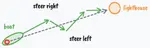
>Cybernetics comes from the greek word kybernetikos which means “to steer” or “good at steering.”
It’s also known as “the art of getting what you want.”
So, if Naval’s definition of intelligence is getting what you want out of life, understanding cybernetics helps you do that much faster.
Cybernetics illustrates the properties of intelligent systems.
- To have a goal.
- Act toward that goal.
- Sense where you are.
- Compare it to the goal.
- And act again based on that feedback.
>You can judge intelligence based on the system’s ability to iterate and persist with trial and error. (picrel alt text)
A ship blown off course that corrects toward its destination. A thermostat sensing a change in heat and turning on. The pancreas excreting insulin after blood glucose spikes.
What does this have to do with getting what you want out of life?
Everything.
Acting, sensing, comparing, and understanding the system from a meta-perspective is fundamental to high intelligence (with the definition we are using here).
High intelligence is the ability to iterate, persist, and understand the big picture. The mark of low intelligence is the inability to learn from your mistakes.
Low-intelligence people get stuck on problems rather than solving them. They hit a roadblock and quit. Like a writer who fails to build a readership and quits because they lack the ability to try new things, experiment, and figure out a process that works for them (to think that there isn’t an effective process you can create is verifiably false, no matter your limiting beliefs, hence being low intelligence.)
High intelligence is realizing any problem can be solved on a large enough timescale. The reality is that you can achieve any goal you set your mind to.
Intelligence is realizing that there is a series of choices you can make which lead to achieving the goal you want. You understand that ideas are hierarchical and that you can’t go from papyrus to Google docs in one fell swoop. Even if that goal is impossible right now, you simply don’t have the resources – which may be invented over the next few years – to achieve that thing.
When I talk about “goals,” and as I will continue repeating, I am not speaking from the typical lens of self-help, although that’s a helpful lens to adopt at times.
I am speaking from the lens of teleology or the Greek kosmos – that everything serves a purpose. That everything is a part of a greater whole.
Goals determine how you see the world.
Goals determine what you consider “success” or “failure.”
You can try to “enjoy the journey,” but if you pursue the wrong goal, you will not enjoy it.
Your mind is the operating system for reality.
That system is composed of goals.
For most people, those goals are assigned to them. Programmed like lines of code in your psyche.
*Go to school. Get the job. Get offended.
nxY8zX
No.4140
A known path that doesn’t work.
To become more intelligent, you must:
- Reject the known path
- Dive into the unknown
- Set new, higher goals to expand your mind
- Embrace the chaos and allow for growth
- Study the generalized principles of nature
- Become a deep generalist
I understand this may not be the traditional definition of intelligence, but that sequence of steps leads to an extraordinary level of connections in your brain, leading to what we would observe as an intelligent person. Pair that with agency and you've got a winner.
That leads us into the next section perfectly.
VI – How to launch into a completely new life (in 1 day)
>The best periods of my life always came after a period of getting absolutely fed up with the lack of progress I was making.
How do you dig into your mind?
How do you become aware of your conditioning?
How do you reach profound insights and truths that change the trajectory of your life?
Through the simple, but often painful act of questioning.
Something that so few people do, and you can tell by how they speak or give their thoughts on a specific topic. Questioning is thinking, and very few people do it.
I want to give you a comprehensive protocol that you can use every year to reset your life and launch into a season of intense progress. This protocol helps you ask the right questions.
These questions will cover the macro to the micro: where you want to be, what you need to do to get there, and what you can do immediately to start moving the needle toward that reality.
This will require one full day to complete, so I recommend you follow along with the exact protocol. You will need a pen, paper, and an open mind.
When I observe patterns in people who successfully flip their identity, it happens fast after a build up of tension. Specifically, I’ve noticed 3 phases that people tend to go through.
1. Dissonance – They feel like they don’t belong in their current life, and become sufficiently fed up with their lack of progress.
2. Uncertainty – They don’t know what comes next, so they either experiment or get lost and feel worse.
3. Discovery – They discover what they want to pursue and make 6 years of progress in 6 months.
So, our goal with this protocol is to help you reach the point of dissonance, navigate through uncertainty, and discover what it truly is that you want to achieve, so much so that the clarity is overwhelming and distractions no longer hold their weight.
This protocol is structured so that it can be completed in one day. In the morning, you do a psychological excavation to uncover your own hidden motives. During the day, you prompt yourself with interrupts to keep you out of autopilot and contemplate your life. At night, you synthesize the insights into a direction you will start to move in tomorrow.
I cannot guarantee that this will work for everyone, because I cannot guarantee that everyone reading this is in the right chapter of their own story that would make these points impactful. You can’t place the climax at the start of the book and expect it to be interesting.
Part 1) Morning – Psychological Excavation – Vision & Anti-Vision
First we must create a new frame, or lens of perception, for your mind to operate from.
This is like creating a new shell, leaving your old one, and slowly growing into it over time. It won’t feel like it fits at first. That’s a good thing.
Set aside 15-30 minutes (the length of one YouTube video... you can do it) to think about and answer these questions. Do not attempt to outsource this contemplation to AI. I want you to break past the limiter that is on your mind. If you can’t answer these immediately, come back to them later.
nxY8zX
No.4141
1. What is the dull and persistent dissatisfaction you’ve learned to live with? Not the deep suffering but what you’ve learned to tolerate. (If you don’t hate it, you will tolerate it)
2. What do you complain about repeatedly but never actually change? Write down the three complaints you’ve voiced most often in the past year.
3. For each complaint: What would someone who watched your behavior (not your words) conclude that you actually want?
4. What truth about your current life would be unbearable to admit to someone you deeply respect?
Those questions are meant to make you aware of the pain in your current life. Now, we need to turn those into what I call an “anti-vision,” which is a brutal awareness of the life you do not want to live. That way, you can use that negative energy to aim your efforts in a positive direction and act from a place of intrinsic motivation.
1. If absolutely nothing changes for the next five years, describe an average Tuesday. Where do you wake up? What does your body feel like? What’s the first thing you think about? Who’s around you? What do you do between 9am and 6pm? How do you feel at 10pm?
2. Now do it but for ten years. What have you missed? What opportunities closed? Who gave up on you? What do people say about you when you’re not in the room?
3. You’re at the end of your life. You lived the safe version. You never broke the pattern. What was the cost? What did you never let yourself feel, try, or become?
4. Who in your life is already living the future you just described? Someone five, ten, twenty years ahead on the same trajectory? What do you feel when you think about becoming them?
5. What identity would you have to give up to actually change? (”I am the type of person who...”) What would it cost you socially to no longer be that person?
6. What is the most embarrassing reason you haven’t changed? The one that makes you sound weak, scared, or lazy rather than reasonable?
7. If your current behavior is a form of self-protection, what exactly are you protecting? And what is that protection costing you?
If you answered those truthfully, and if you are in the right chapter of your life, you will feel a deep sense of dis-ease and possibly disgust for how you are currently living. Now, we need to orient that energy in a positive direction. We need to create a minimum viable vision, because your vision is like a product. It starts out unclear, but with time and experience, it grows stronger and more potent.
8. Forget practicality for a minute. If you could snap your fingers and be living a different life in three years, not what’s realistic, what you actually want? What does an average Tuesday look like? Same level of detail as question 5.
9. What would you have to believe about yourself for that life to feel natural rather than forced? Write the identity statement: “I am the type of person who...”
10. What is one thing you would do this week if you were already that person?
Answer all of those first thing in the morning tomorrow.
Part 2) Throughout The Day – Interrupting Autopilot – Breaking Unconscious Patterns
These journaling exercises are cute, but we want real change.
Frankly, that’s not going to happen if you don’t break the current unconscious patterns that are keeping you the same.
Throughout the day, I want you to contemplate on everything you journaled in part one. Beyond that, I don’t want you to forget to contemplate. Please take this seriously. You aren’t going to change by doing the same thing for the rest of your life. You need to consciously force a pattern break.
Take the time right now to create reminders or calendar events in your phone. Include the question in the reminder or event so that you can immediately start thinking about it.
nxY8zX
No.4142
The more random and non-conflicting with your schedule there are, the better.
- 11:00am: What am I avoiding right now by doing what I’m doing?
- 1:30pm: If someone filmed the last two hours, what would they conclude I want from my life?
- 3:15pm: Am I moving toward the life I hate or the life I want?
- 5:00pm: What’s the most important thing I’m pretending isn’t important?
- 7:30pm: What did I do today out of identity protection rather than genuine desire? (Hint: it’s most things you do)
- 9:00pm: When did I feel most alive today? When did I feel most dead?
To add a bit more fuel to the fire, schedule these questions during times where you are either commuting, walking, or lying around.
- What would change if I stopped needing people to see me as [the identity you wrote in question 10]?
- Where in my life am I trading aliveness for safety?
- What’s the smallest version of the person I want to become that I could be tomorrow?
Part 3) Evening – Synthesizing Insight – Entering A Season Of Progress
If you followed that process, I would be surprised if you didn’t have at least one profound insight that could alter the course of your life. Now, we need to make those known, integrate them into who we are, and act on them to begin solidifying our journey to a new level of mind.
1. After today, what feels most true about why you’ve been stuck?
2. What is the actual enemy? Name it clearly. Not circumstances. Not other people. The internal pattern or belief that has been running the show.
3. Write a single sentence that captures what you refuse to let your life become. This is your anti-vision compressed. It should make you feel something when you read it.
4. Write a single sentence that captures what you’re building toward, knowing it will evolve. This is your vision MVP.
Lastly, we need to create goals.
Again, these aren’t goals that you set for the sake of achievement, because goals are just projections. They are unreliable and make you feel bound to something that will inevitably change. Instead, think of goals as a point of view. A lens that you can exchange to enter the right state of mind to perform the action that will lead away from the life you don’t want. Do not worry about some kind of finish line, because as we will find, it doesn’t exist. Enjoyment is found in progress.
1. One-year lens: What would have to be true in one year for you to know you’ve broken the old pattern? One concrete thing.
2. One-month lens: What would have to be true in one month for the one-year lens to remain possible?
3. Daily lens: What are 2-3 actions you can timeblock tomorrow that the person you’re becoming would simply do?
That was a lot.
Hopefully it was helpful.
But we have one last piece to lock it all in.
Stick with me.
nxY8zX
No.4143
VII – Turn Your Life Into A Video Game
>The optimal state of inner experience is one in which there is order in consciousness. This happens when psychic energy—or attention—is invested in realistic goals, and when skills match the opportunities for action. The pursuit of a goal brings order in awareness because a person must concentrate attention on the task at hand and momentarily forget everything else.
> – Mihaly Csikszentmihalyi
You now have all of the components that lead to a good life.
Now, it may be helpful to organize all of your insights into one coherent plan. Pull out a new page and write down these 6 components:
1. Anti-vision – What is the bane of my existence, or the life I never want to experience again?
2. Vision – What is the ideal life that I think I want and can improve as I work toward it?
3. 1 year goal – What will my life look like in 1 year time, and is that closer to the life I want?
4. 1 month project – What do I need to learn? What skills do I need to acquire? What can I build that will move me closer to the one year goal?
5. Daily levers – What are the priority, needle-moving tasks that bring my project closer to completion?
6. Constraints – What am I not willing to sacrifice to achieve my vision from the ground up?
Why is this so powerful?
Because these components literally create your own little world. If you are meant to pursue this hierarchy of goals at this stage of your life, you will have no other option but to become obsessed. You will feel the pull to something greater. You will not see anything else as an option.
You turn your life into a video game.
Because games are the poster child for obsession, enjoyment, and flow states. They have all the components that lead to focus and clarity, so if we reverse engineer what those components are, we can live in a state of deeper enjoyment, less distractions, and more success.
Your vision is how you win. At least until the game evolves.
Your anti-vision is what’s at stake. What happens if you lose or give up.
Your 1 year goal is the mission. This is your sole priority in life.
Your 1 month project is the boss fight. How you gain XP and acquire loot.
Your daily levers are the quests. The daily process that unlocks new opportunities.
Your constraints are the rules. The limitations that encourage creativity.
All of these act as a concentric set of circles, like a forcefield, that guard your mind from distractions and shiny objects.
The more you play the game, the stronger this force becomes, and soon enough it becomes who you are, and you wouldn’t have it any other way.
– Dan
nxY8zX
No.4145

I hate dreaming about better future when I know I cannot handle the weight of a better life and the burden of an unhinged, vile past. To know you probably can do better but still sabotage everything because you know your insecurities (genuine btw) will ruin everything eventually is such a tarded faggot tier behavior and yet, yet I can do nothingbut repeat this cycle, every week every day every month.
I ruin every good thing, get jealous, insecure and shit ton of other issues. An average woman has less issues.
Kill me yaar. End this stupid baka humiliation ritual.
(bpd post, dont take seriously)
HHvRsr
No.4147
>>4145
think less bitch
Yw/TiZ
No.4156
Yw/TiZ
No.4160
How do you even proceed to fix yourself after messing up so badly in so many different areas?
>read the posts above
yeah.
Yw/TiZ
No.4162
Yw/TiZ
No.4165
day #1 of decreasing my dependence on music as a means of overstimulation
fairly successful.
Yw/TiZ
No.4166

Yw/TiZ
No.4167
Read Simon's Papa.
Sleep time. Good night fellas.
ybC9e5
No.4171

Are we just mere numbers? A point on the scale? Are we just labels? Because it sure feels like that. Everyone is chasing some label, some metric. I am no exception. But what's the point? What's the point of trying to be an HTN or CL when your inner world is worse than a junkyard? Atleast a junkyard harbors occasional treasure, but you? You are as hollow and soulless as one can get. Lookxmaxxing won't save your soul, no maxxing would. The soul is continuous. Try to inhibit it with labels and categories and you assure yourself misery. Be free, be liberated. Leave this convenient classifications and allow yourself the expansion of mind.

I think I tried to say something profound and failed miserably. The problem is just that, that desire to say something [quality]. What is [quality] doesn't have to have that label attached to it. It just is. It comes to you. You have to let that environment to grow in your for those thoughts and ideas to take hold. Constant noise won't let anything good to occur to your mind.

ybC9e5
No.4172
imagine being filtered by basic probability
X3qZB4
No.4173
>>4107
I Negrocharya maxxed as much as I could, still need to Negrocharya Maxx a lot. Hope everything is going nice and well for rest of you.
X3qZB4
No.4174


0dwOwL
No.4178
>>4072
damn. i wish i lived in a place that had cool snow like that
0dwOwL
No.4179
>>4080
kek i remember this chick from inch
0dwOwL
No.4180
>only anon regular on /gen/ is oniichan
Abey yaar i thought you were some newbhangi. This chan really is small huh
krwtkC
No.4181

>>4180
it is small lulz. also I am no different from a newbhangi on imgboards.
have you got a name anan?
0dwOwL
No.4183
krwtkC
No.4184

>>4183
O. I never saw that name on bhach. Your an oldfag. I started using imgbs from late 2024 so much of the lore is lost on me.
Post some lore here sometime anan.
krwtkC
No.4185

>>4173
Things are okay, anan, with occasional mood swings every now and then.
I remember you saying something about SSC exams. What govt jaab are you prepping for? How does one get started with history from an absolute novice position?

Cxn8Wa
No.4188

don't inhibit yourself. until it becomes 2nd nature you have to force it.
RCbKRn
No.4189

I seek your shadow in people. Vessels to put what was supposed to go to you. It's become a sickness. A necessary sickness I suppose.
I don't know what is true and what is not. Who I am and who I am not. The dissociation is strong. My thoughts are getting increasingly murky, and my memory fails me every day at random moments. I am yet I am nowhere.
RCbKRn
No.4190



RCbKRn
No.4192



wEAldt
No.4195
>>4188
Underrated thought and post. It means a lot and most people underestimate how strong not caring is. Esp in a socially strong soyciety like India.
wEAldt
No.4196
>>4187
people who live their lives on the internet are already dead.
X3qZB4
No.4198
>>4185
>Things are okay, anan, with occasional mood swings every now and then.
That's pretty normal
>I remember you saying something about SSC exams.
Still working on it. It's easy as fuck but I can't make myself sit through the lectures. Teacher are unironically stupider than me and their mode of communication makes me wish to read my skin off.
>What govt jaab are you prepping for?
CGL
>How does one get started with history from an absolute novice position?
Easiest is ancient history, if you look at it in the context of India. It's short, concise and their is not much. Then the flesh and interesting part is after it, medieval, such as Solanki, Mughalfags, Sikhi empire and so on.
After that modern history. It is pretty boring, but it's not that bad. Once you cover it all, you can go for global history. It's mostly just world war and cold war. You don't have to go in too much bone of it. Just brisk through it, world war is still very interesting. If you want to you can learn about different nations and how it affected them.
After that you can learn about history of other nations in similar manner.
X3qZB4
No.4199
>>4190
Thanks anon, this will help
X3qZB4
No.4200
>>4190
Thanks anon, this will help
X3qZB4
No.4202
>>4198
For update I didn't get to finish my stoody of the Negrocharya. I will try to finish all of it by this week at all cost. I want to get to the root of this chimping that made cuckbhangir so schizo.
3PONCZ
No.4205
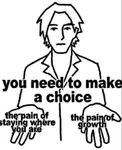
3PONCZ
No.4206
I2GU4q
No.4207
day #2 of trying to decrease my dependence on music
fairly successful
3PONCZ
No.4212
I don't use computers the way they were intended to be used.
3PONCZ
No.4213
a change of habits is needed
0dwOwL
No.4214
>>4185
saw a chick walking in this at -9°C kek
3iy8hL
No.4215
>>4214
ladkiyo ko thand nhi lagti
3iy8hL
No.4216

I wonder how the inevitable homogeneous culture of United Earth is going to looklike.
3iy8hL
No.4225

Not studying during my 11th and 12th even for boards much less any competitive exams will surely haunt me for years. I so want to restart my life bros. I lack so much know how of maths, know little to no physics and chemistry and most importantly I missed out an important teenage experience of the grind.
Now I go through my everyday life as a bsc tard not knowing anything about anything clearly and struggling with basic shit, and with a mind already fried from [insert randirona topics here].
Had I studied even just a tiny bit I'd have been doing BTech from some tier 69 kalej and would've had a wider range of options available to me.
3iy8hL
No.4226

https://lainchan.org/%CE%A9/res/90137.html#q90145
https://lainchan.org/%CE%A9/res/90137.html#90155
These two posts sum up pretty well what kind of user I have been of the internet.
>You merely want to be a tourist that observes "funny animals" in their natural habitat without sharing in their anything. This is why everything feels empty to you and others like you. you don't actually have a genuine interest and are thus filtered from places that do have an interest.
This line mainly. On more than one occasions I have whined about the internet not feeling alive. But is it the place that is boring or my lack of participation and interest that is leading me to believe it is boring. I'd be giving myself too much credit by saying I lost interest in things at some point in the past when I remember not a single moment in my life when something genuinely piqued my interest.
I have been but a ghost consuming the most surface level shit. Even on this site my presence and participation is limited to this thread and a few other threads here and there where no actual interest is required.
Basically, what I want to say is I am not the kind of person Internet was made for. I do not go out on internet voyages, never spend time on any of the good sites I find. It's all there for a spectacle, my collection is just that, a collection. A guy who has read a few books deeply will always know more and be more wise than the guy who has a library but has read none of his books.
This is a problem. A problem of the psyche, of habit, of inclinations. My natural inclination is towards superficiality and if I let it continue that way I am surely setting myself up for failure. Idk how but I feel like it.
Idk man. I am just confused.
vHEf3y
No.4227
>>4226
>Basically, what I want to say is I am not the kind of person Internet was made for. I do not go out on internet voyages,
The current state of internet doesn't really encourage it does it?
3iy8hL
No.4228

>>4226
I hate being a mindless goyslop consumer (and hate the fact that I let myself be one for a decade letting everything else to ruins is another big regret), as well as being unable to contribute to anything or having/building a genuine interest in anything. The illusion of being different that came from having discovered imgbbs and "alt"-internet has also faded and now I am stuck questioning my place in all of this.
God please blast this brain of mine.
3iy8hL
No.4229
>>4227
Yeah. Most things can be found within a few clicks and there's never really a need to go beyond YouTube and the first few search results on google. There's not much incentive to go beyond the big sites in search of things.
wEAldt
No.4235
wEAldt
No.4238
>>4228
>>4229
>>4226
Real alt anons live weird lives. No cellphone, always on the run or hiding in plain sight. Hunted by governments. Fired for fringe views etc.
There is so much outside of normie net of Youtube and Jewgle. But most normies don't think about what they don't know. So they never seek what they are missing.
Most internet is useless for these purposes now. Those who know things, have moved to printed backups and offline air gapped machines. Using the internet only for occasional communication.
There is no hope for Sheeple.
YLT21z
No.4250
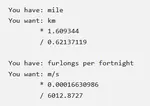
Starting today I'll use my phone with my left hand. Typing, scrolling everything.
>reason
nhi hai koi reason. chul machi hai
JFHqL+
No.4257
Things like being able to talk to people, hold conversations through difficult topics, articulate thoughts and be somewhat sure of yourself are all signs of a capable mind. A mind that atleast isn't dumb.
I lack all those features. fuck man
R4nGke
No.4258
>>4257
I can do all of those things but lack emotions and get the most unhinged thoughts sometimes
DW you would be fine …
R4nGke
No.4259
>>4225
I gave my JEE Mains 1st attempt yesterday
23S1 and it turned out to be the hardest shift
Worst part is that i have the iq, Time , resources and focus to actually crack the exam yet I didn’t even try enough and parents had expectations so that’s even worse
Anyways , let’s see what happens
JFHqL+
No.4260
>>4258
I used to think it'd be fine bro but it just gets shittier by the day. I have been in constant headache since I guess a year. Even doing and remembering simple things is getting difficult.
>>4259
Yaar why not even try knowing you've got everything you need to fw this exam. All the best for JEE chadjeet