Recent Posts



























Effeminization of Krishna

F9tDYI
No.722
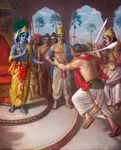
Bhagavad Gita 4.7–8
>Whenever there is a decline in righteousness and a rise in unrighteousness, O Arjuna, at that time I manifest Myself. To protect the good, to destroy the wicked, and to establish dharma, I appear in age after age
Bhagavad Gita 7.7
>There is nothing higher than Me, O Arjuna. All that exists is strung on Me like pearls on a thread
Bhagavad Gita 11.32
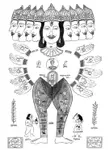
> I am Time, the great destroyer of the worlds, and I have come to annihilate all beings
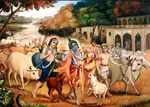
These verses make it clear that Krishna is the Supreme God — Svayam Bhagavan, not merely a charming cowherd but the very source of creation, sustenance, and destruction.
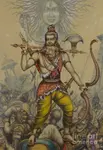
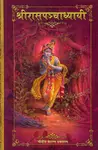
Yet over the centuries, especially in medieval and modern devotional traditions, Krishna’s playful and romantic aspects (madhurya) have often overshadowed his majestic and warrior aspects (aiswarya). ISKCON, for example, emphasizes Krishna’s sweetness, love, and flute-playing, while giving less attention to his role as a ruthless strategist and destroyer of adharma.
But the Krishna of the Mahabharata is both. He severed Shishupala’s head with his Sudarshana Chakra, guided the Pandavas in avenging the Kauravas, and was strategically involved in the downfall of Bhishma, Drona, and Karna.
Krishna, therefore, is not just a symbol of divine love, he is also the cosmic power who destroys evil. He embodies both the tenderness of devotion and the fierceness of justice.
gY9yDR
No.724
>>722(OP)
Krishna even as a character feels like 3 different people sewed into one for the sake of continuity
Krishan till he killed kans is totally different than the kirshna who was in Mahabharata and even the krishna after Mahabharata who became the king of dwarika was very different from both of these
You can never remove the Effeminization from krishna because he is not a consistent character even in his own stories
Instead of focusing on masculinisation of Krishna, it would be better if everyone adopted Ram over him as he is actually a continuous character and is not too Machiavellian for the general populace