Recent Posts


















Bihar eastern up is source of all major religions in India post hinduism, >Jainism >Buddhism >Sikhism In fact, same region was hub for North Black Polish Ware culture which coincides with first set of urbanization post fall IVC and it was first ...
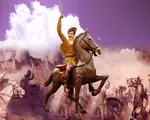





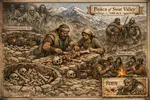
Story of peoples dwelling in Swat Valley circa 1000bce

VhSt05
No.1160
An interesting thread i saw on Swat valley people in 1100 bce, worth resharing,
--
A little anthropological story about the Swat burials (largest aDNA trove in India's NW) which was used to estimate the admixture dates of Steppes ancestry into Indians. This detail was omitted in the Narasimhan et al. 2019 paper.
Every archaeologist who has worked in the Swat Valley, including the latest ISMEO mission that yielded the aDNA, have noted this peculiar character of that Culture.
In the 1970s, AH Dani, the Pakistani archaeologist, professed the hypothesis that the Swat Valley Cultures might be the early Indo-Aryans.
To answer this question, SP Gupta, the then ASI chairman, produced a detailed paper to settle the matter.
His conclusion was negative and it entirely hinged on the funerary practices of the Swat Valley. What was it?
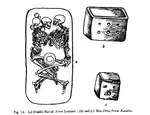
A deceased individual would be interred for a short period of time. Then the remains would be disinterred and then manipulated with a ritual.
The body would be defleshed thoroughly and the bones intentionally fractured with an implement.
Both these operations were initiated after a short primary period of internment - because the effort to deflesh and dismember the remains were quite heavy and required force.
The arm bones (ulna and radius) would be intact with the cut in the upper humerus. Basically the arm was separated below the shoulder.
On the coxal (hipbone), surface cuts were administered neatly to separate the flesh from the ham and the legs.
The implements used were metal-sharp and they left cut marks often in neat parallel lines - marking expertise.
After this ritual, the bones were collected and deposited in a secondary burial. The secondary burial was often communal - the bones would share space with earlier occupants.
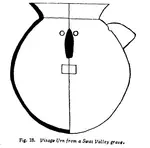
There is evidence showing that food was cooked and liquids were consumed by the participants in this ceremony. The cooking pots and drinking cups were abandoned in the graves.
SP Gupta's 1972 paper was neat - he marshalled funerary rituals from the RV, AV and the S.Br to demonstrate that these practices were unheard of in the Indo-Aryan praxis. Ergo, the Swat Valley Cultures could not be IA at all, let alone the incoming wave.
SP Gupta's conclusion has remained unchallenged for the last 50 years within the archaeological community. Funerary practices are the strongest indicator of religious and linguistic orientation (Sintashta chariot burials). And SP Gupta was on target.
But who were they, if not Indo-Aryans? The Swat Valley Cultures of 1100 BCE, enriched in Steppes ancestry......what was their identity?
In the the Atharvaveda, a new class of people are described. Piśāca (पिशाच). This is a direct functional term, derived from Piśita (पिशित) - meaning eaters of human flesh.
In the the Atharvaveda, a new class of people are described. Piśāca (पिशाच). This is a direct functional term, derived from Piśita (पिशित) - meaning eaters of human flesh.
The Sanskrit word Piśāca becomes a neologism eventually. It means a demon and spreads to all other languages. Example: in Tamil, the word பிசாசு
The languages of the Piśāca becomes Paiśāchi. It's classed as gibberish with no rules. The Indian epic Mahabharata records Piśācas living in NW India and Central Asia.
This is the lore behind Swat Valley.
--
https://nitter.net/Ugra___/status/1983522276445151437 it's interesting stuff.
VhSt05
No.1164
>>1160(OP)
https://ia801901.us.archive.org/6/items/in.ernet.dli.2015.107765/2015.107765.Disposal-Of-The-Dead-And-Physical-Types-In-Ancient-India.pdf this paper has references to it, you can find dedicated paper by Gupta on the topic.
Interesting stuff that rigveda and later dharmshastras considered circular burrials as asura type. rectangular/square as Aryan.
6tWbaE
No.1165
6tWbaE
No.1166
VhSt05
No.1168
>>1166
would make sense.
MyyF6D
No.1169
>>1160(OP)
You know scythians , huns and many other central asian groups who were basically very high ehg and looked like Scandinavians emerged out of no where , ruled central asia followed aome sought of “indo iranian” which papers say (i dont trust them ) which was very close to hinduism , these groups very very brital like the most brutal . These same groups then later came to india and Indianised doesn’t make sense. The descendants of same groups claim their ancestry from Shri ram , karna , arjun and many others. Also many scientists why is haryana so high steppe anncestry when steppe ancestry enterd from swat valley and also haryan doesn’t follow any of those central asiann ritual neither their language , these points are argued in many papers. Read some where scythians claimed that their originator was rishi vasistha who cmae down from the mountains did yajna when adharma was highest , they also claimed that they were agnivansh also interestingly vasistha is also in iranian text and also core part of Iranian religion (Zoroastrianism) is the fire ritual . Are you connecting the dots ??
Ignore typos.
MyyF6D
No.1170
>>1169
Some save this
MyyF6D
No.1171
>>1170
Somebody
VhSt05
No.1172
>>1169
as i understand the vasistha was titular role. many of the steppe groups got indianized. jatts being termed shudra instead of kshatriya like few of the descendentsof those groups is interesting.
sanskritization did happen, some of their gods or entities were absorbed into the pantheon.
Rama etc. are merger of the NBPW and PGW culture. likely referring to an actual king but who also got sanskritised.
zoroastrian also had equivalent to manu who created four varnas, i frogot his name.


Mf754B
No.1175
>>1172
>jatts being termed shudra instead of kshatriya
This would be a little subjective. Jatts are very much classified as Vritya so they were Kshatriya at one point before being labelled fallen, and they still have had historically good relations with a large number of UC's despite that.
rWM1Bl
No.1176
>>1172
Rama , mahabahrat are older than ivc , they are older than 50-100 k years.
Mf754B
No.1177
>>1176
Are we completely sure about this?