Recent Posts









Goverment is finally beginning to show focus on go...






























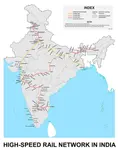
India needs mission 5000km High Speed Railway by 2035

l9gU0V
No.707
China's first true HSR route was of 174km length, constructed in 2008. It took 3 years for them.
Then between 2008 to 2015, they added total 19,000km of hsr lines at the rate of 1000km/year to more than 3000km per year.
>2008 → Beijing–Tianjin (117 km) opened, first true HSR line.
>2008–2015 → The “golden rush.” Annual additions went from ~1,000 km/year to >3,000 km/year.
>2010 → China had ~8,400 km.
>2015 → Over 19,000 km.
>2019 → ~35,000 km.
>2023 → ~43,000 km.
They didn't stop in 2015, in next 8 years they went on to add 14,000km more of hsr line. Almost 2000km / year annual addition.
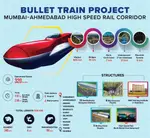
Our first hsr line, Ahmedabad to Mumbai is of length 500km going through one of the most challenging areas all elevated properly began in 2021 and most of the civil infra and electric infra will be completed by 2028.
Time is ripe now, we should prepare country for 5000km HSR line by 2035. It will be completely change the landscape of the country
>entire india less than 10hrs away.
>massive infra building providing gorillions of jaabs
>massive cement, steel consumption leading to further gdp increase
>by 2035 we will be almost 7000pci to 8000pci.
It will be perfect time, you can only build infra when you are growing we have peak manpower, developing economy right now. This is the best time for HSR.
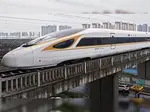
Instead of elevated we can have fenced tracks, vande bharat trainsets which are around 280kmph at peak with successive iterations of BEML vande bharat with aluminum coaches, tilting tech all standard gauge reaching upto 320kmph eventually.
Specific routes can have japanese trainsets if they want but most sections should be like above. For the rest of the railway tracks, let them be upgraded till 160kmph to 180kmph, let them be used by current sleeper ac vande bharat trainsets etc. Legacy trains.


lRb1Ya
No.711
>>707(OP)
>Time is ripe now, we should prepare country for 5000km HSR line by 2035.
Kino dream, let's go on by addressing the true challenges of this. Any engineer anamases (not the meme ones, the real ones) feel free to add your two paisas here. Tell us what will the issues we face as a nashun, and how feasible it is.
lRb1Ya
No.712
>>709
Country hai, Incel thodi hai, Milegi Milegi, keku.
l9gU0V
No.713
>>711
Only issue seem to be land acquisition which can be managed imho.
>our civil infra devs are great - look up hsr videos by likes of L&T
>electric infra - ig medha etc. can manage, additional learnings from nippon lands.
>trainsets already under fabrication, 280kmph by BEML, production can be managed by our private bodies.
Enough time.
lRb1Ya
No.714
>>713
Sasuga nippon, here is to hoping we have some kino and good relation with the samurai people.
l9gU0V
No.727
How much of china's HSR tracks use slab tracks instead of ballasted tracks?
xI5TX5
No.728
Hindoo kitna sapna dekhega, jaago hindoo jaago
GTPPZm
No.729
>>707(OP)
make skysc(epi)rs first pajeet
xI5TX5
No.730
>>729
Pajeets are all talk and nothing else.
If 1% of what Pajeets kang about materialised Pajeetland would be some utopia.

l9gU0V
No.902
>>707(OP)
So based on the new presentation by IR Minister, we are aiming for 7000km of dedicated passenger corridor by 2047.
7000km in 22years.
Around 320km / year vs my wishful goal of 700km/year.
With 7000km they will be able to connect almost all major sections of India. But timeline needs to be shortened.
By 2040 we will have like 4000km maybe 4500km route operational.
l9gU0V
No.903
>>902
Interesting the reality of my mortal self hit me a bit, i will be old 
Nd+ird
No.904
>>903
Millenials will be proper boomers in 2047